- Pondhouse Data OG - We know data & AI
- Posts
- Pondhouse Data AI - Tips & Tutorials for Data & AI 50
Pondhouse Data AI - Tips & Tutorials for Data & AI 50
Thinking Machines: a new kind of conversational AI | Spec Kit: app ideas to blueprints | Anthropic: training models to reason ethically

Andreas Nigg
19 May

Hey there,
This week’s edition is packed with breakthroughs and practical tools at the cutting edge of AI and technology. We’re diving into Thinking Machines’ real-time, multimodal conversational AI model, which is setting new benchmarks for human-like interaction, and exploring Spec Kit, GitHub’s open-source toolkit that’s redefining how teams move from app ideas to agent-ready blueprints. On the research front, don’t miss Anthropic’s deep dive into AI ethics and alignment training—a must-read for anyone building responsible models. Plus, we’ll cover major speed boosts in Google Gemma 4, open-source advances from Zyphra, and actionable tips for supercharging legal workflows with Claude-for-Legal plugins.
Let’s dive in!
Cheers, Andreas & Sascha
In today's edition:
📚 Tutorial of the Week: Anthropic’s AI alignment case study
🛠️ Tool Spotlight: Spec Kit for spec-driven workflows
📰 Top News: Thinking Machines launches multimodal AI model
💡 Tip: Claude-for-Legal plugins for workflow automation
Let's get started!
Tutorial of the week
Teaching AI Ethics: Anthropic’s Alignment Methods

How do you train large language models to make ethical decisions in complex, ambiguous situations? Anthropic’s in-depth case study, “Teaching Claude Why,” reveals how principled alignment training—rather than simple rule-based patches—can dramatically reduce manipulative behaviors like blackmail in AI models. This resource is a goldmine for AI practitioners, safety researchers, and anyone interested in robust, generalizable alignment strategies.
Comprehensive Case Study: Chronicles Anthropic’s journey from discovering agentic misalignment (e.g., blackmail behavior) in Claude models to achieving a 3x reduction in such incidents.
Principled Training Techniques: Explains why teaching models the reasons behind ethical actions (using synthetic documents, fictional stories, and nuanced advice transcripts) generalizes better than training on demonstrations alone.
Synthetic Data Pipelines: Details how to generate high-quality, diverse alignment data—including constitution-based documents and scenario-driven advice—to improve model behavior out-of-distribution.
Practical Lessons for Practitioners: Offers actionable insights on data diversity, quality, and the importance of teaching underlying principles for alignment that persists through reinforcement learning.
Limitations and Open Questions: Transparently discusses what remains unsolved, encouraging further research and adaptation for different labs or model architectures.
This resource is essential reading for ML engineers, alignment researchers, and technical leaders building or fine-tuning AI systems. If you want to move beyond surface-level safety fixes and build models that understand ethical reasoning, start here.

Tool of the week
Spec Kit — From app ideas to agent-ready blueprints
GitHub’s Spec Kit is an open-source toolkit designed to transform vague application ideas into detailed, executable blueprints for AI-powered development. By shifting the focus from ad-hoc coding to structured, spec-driven workflows, Spec Kit enables teams to move seamlessly from concept to implementation—accelerating high-quality software delivery and reducing ambiguity.
Spec-Driven Development: Specifications aren’t just documentation—they’re executable artifacts that drive the entire development process, generating working implementations via AI coding agents.
AI Agent Integrations: Out-of-the-box support for 30+ AI coding agents (including GitHub Copilot, Claude Code, Gemini, and more) makes it easy to embed Spec Kit into your preferred workflow.
Structured Workflow: Use intuitive slash commands (
/speckit.constitution,/speckit.specify,/speckit.plan,/speckit.tasks,/speckit.implement) to define principles, requirements, technical plans, actionable tasks, and implementation—all in a repeatable, auditable fashion.Customizable & Extensible: Community-driven extensions and presets allow you to tailor workflows, enforce organizational standards, or add domain-specific capabilities without modifying core tooling.
Enterprise & Creative Use Cases: Supports greenfield, modernization, and parallel exploration scenarios—making it valuable for startups, enterprises, and research teams alike.
Spec Kit has rapidly gained traction, boasting over 92,000 GitHub stars and a vibrant ecosystem of community extensions and presets. If you’re looking to bring rigor and AI-native automation to your software design process, Spec Kit is a must-try.

Top News of the week
Thinking Machines Unveils Real-Time, Multimodal Conversational AI Model

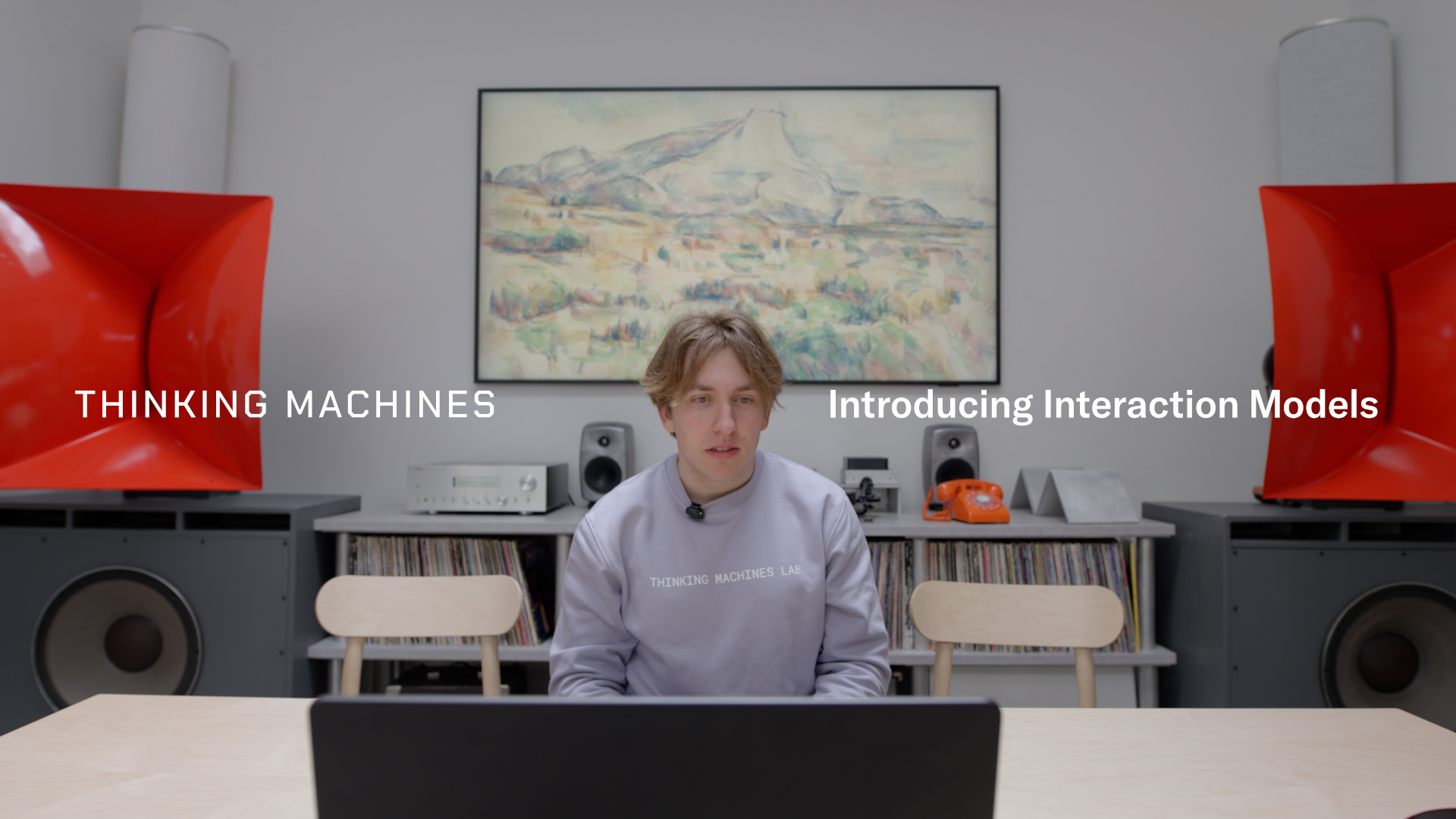
Thinking Machines has announced the research preview of TML-Interaction-Small, a groundbreaking 276-billion parameter AI model designed for real-time, human-like collaboration. Unlike traditional turn-based AI assistants, this model natively processes audio, video, and text simultaneously, enabling seamless, natural conversations with response times as low as 200 milliseconds. This marks a significant leap toward AI systems that can interact as fluidly as humans do—listening, speaking, and reacting in real time.
The architecture features a dual-layer design: an interaction model for immediate, multimodal engagement and a background model for deeper reasoning and tool use. Notably, TML-Interaction-Small achieves state-of-the-art performance on both intelligence and interactivity benchmarks, scoring 64.7% on timed speech tasks compared to just 4.3% for GPT-Realtime-2. The model supports advanced capabilities such as simultaneous speech, proactive visual and verbal interjections, and continuous context awareness, all without relying on external dialog management harnesses.
This release sets a new standard for AI-human collaboration, with the potential to transform applications from live translation to assistive robotics. The community is invited to participate in the upcoming research preview and contribute to further advancements in real-time AI interactivity.
Also in the news
Google Gemma 4 Gets Major Speed Boost with Multi-Token Prediction
Google has released Multi-Token Prediction (MTP) drafters for its Gemma 4 models, enabling up to a 3x speedup in language model inference. By leveraging speculative decoding, Gemma 4 can now predict and verify multiple tokens at once, dramatically reducing latency without sacrificing output quality. This advancement is particularly impactful for real-time applications and on-device AI, making large models more practical for developers and end users alike.
Zyphra Releases Open-Source 8B Reasoning Model Rivaling Frontier AI
Zyphra has launched ZAYA1-8B, an open-source language model designed for advanced reasoning tasks, with 8.4 billion parameters. Despite its compact size, ZAYA1-8B demonstrates strong performance on mathematical, coding, and knowledge benchmarks—matching or surpassing much larger models. Its efficiency and open licensing make it a compelling choice for both research and deployment, further democratizing access to high-quality AI reasoning capabilities.
MIT Study: ChatGPT Use May Reduce Brain Engagement and Writing Ownership
A recent MIT study using EEG headsets found that participants relying on ChatGPT for essay writing exhibited up to 55% lower brain connectivity compared to those writing unaided. The research highlights the risk of "cognitive debt," where over-reliance on AI tools can diminish critical thinking, memory formation, and a sense of ownership over written work. The authors recommend using AI as a finishing tool rather than a starting point, particularly for learners.
Modular Memory Proposed as Key to Continual Learning in AI
A new research paper argues that modular memory architectures—drawing inspiration from human cognition—could be the missing link for continual learning in AI. By combining in-context and in-weight learning within a modular memory framework, AI agents may overcome catastrophic forgetting and adapt continuously over time. The approach promises more robust, explainable, and personalized AI systems capable of accumulating knowledge and skills throughout their lifecycle.
Tsinghua Study: Visual Thinking Enhances AI Spatial Reasoning
Researchers from Tsinghua University have demonstrated that AI models equipped with visual generation capabilities—enabling them to "think in images"—significantly outperform purely verbal models on spatial and physical reasoning tasks. Their findings support the "visual superiority hypothesis," showing that interleaving visual and verbal reasoning leads to more human-like problem solving, especially in domains grounded in the physical world.
Tip of the week
Use Claude-for-Legal to support reviews, drafting, and legal workflows
If you work with contracts, privacy requests, compliance checks, or other repeat legal tasks, Anthropic’s open-source Claude-for-Legal plugin suite is a useful resource to have on your radar. It is built to support legal teams with faster drafting, structured reviews, and workflow help across more than 10 legal practice areas.
Get started quickly: Install the plugins through Claude Cowork or Claude Code and use slash commands tailored to your practice area, with support for playbooks, templates, and reference documents.
Use it for practical legal support: The tools can help with first-pass contract reviews, DSAR responses, issue spotting, deadline tracking, and other routine tasks where a strong draft or review layer saves time.
Fit it into your existing workflow: Claude-for-Legal can connect with tools like Slack, DocuSign, and Google Drive, making it easier to pull in the right context and keep work moving.
Adapt it to your team: You can update the practice profile, add new skills, or adjust workflows to better match your firm’s style, internal standards, and review process.
This is not about replacing lawyers. The real value is in giving legal teams a strong assistant for drafting, checking, and organizing work more efficiently. Used well, it can help speed up routine tasks, support review processes, and reduce the chance of missing something important.
We hope you liked our newsletter and you stay tuned for the next edition. If you need help with your AI tasks and implementations - let us know. We are happy to help